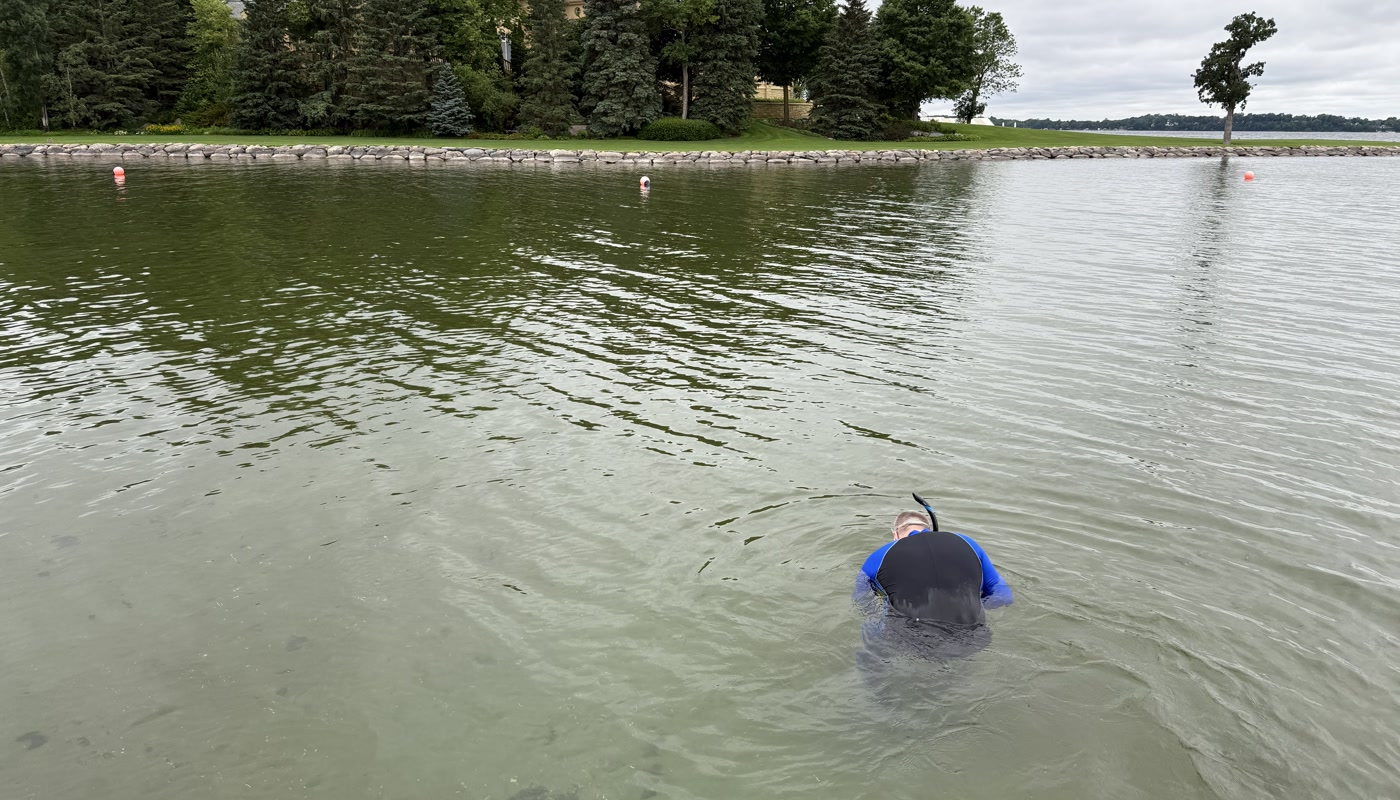
Lake Management · Swimmer's Itch Control
Your lake has a problem that won't fix itself.
Effective swimmer's itch control requires species identification, snail and waterfowl biology, and government permits most associations don't know they need. We've spent 35 years figuring all of it out — so you don't have to start from scratch.
Start the Conversation →Why It's So Hard to Fix
Most lakes don't know what they're dealing with.
There are 13 distinct swimmer's itch parasite species in North America — each cycling through a different snail host and a different species of waterfowl. Most lake associations don't know which one is in their lake, which snails are involved, or which birds are driving the cycle. Without that foundation, every dollar spent on control is a guess.
The problem isn't that lakes are trying the wrong things. It's that most lakes have no idea where to start. They don't understand what causes swimmer's itch, what makes it worse year over year, or what a realistic path to improvement actually looks like.
That's what we provide. Before anything else can work, a lake needs to be properly assessed — and the people who live on it need to understand what they're up against.
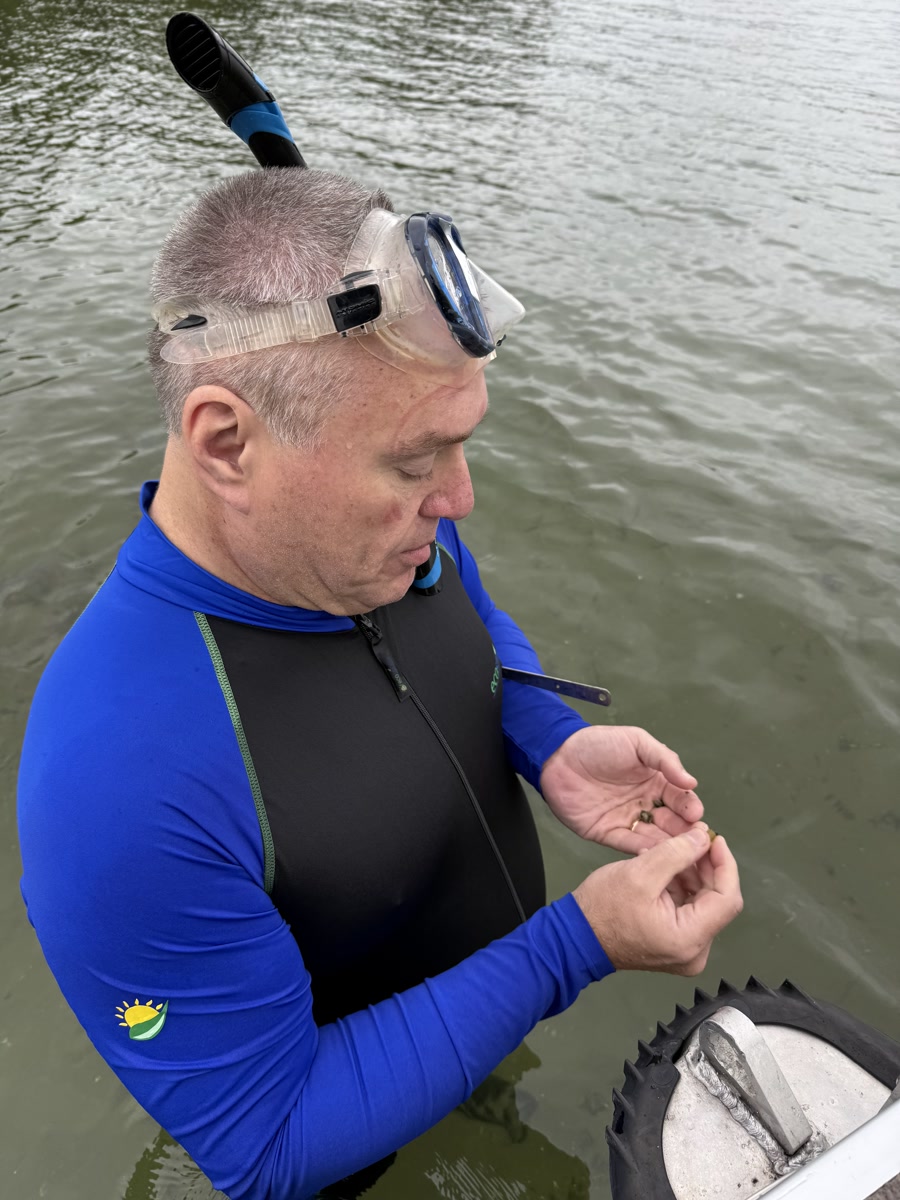
Why I Built This
I watched a lake I loved become unswimmable.
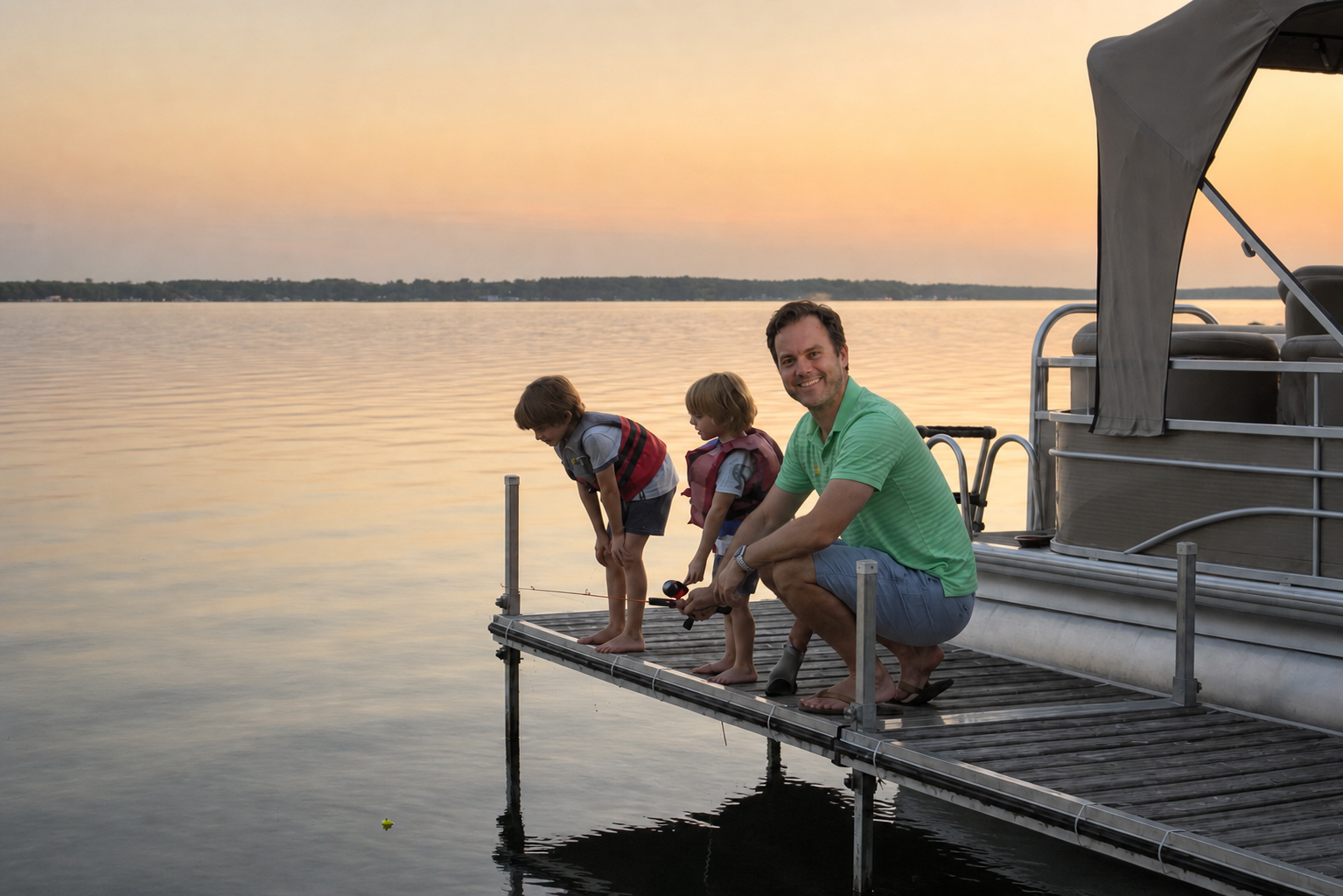
Since the age of two, I spent every summer of my life at our family's cabin on a lake in northern Minnesota. For 42 years — through my childhood, my twenties, raising my own family — we swam, splashed, and played in that lake without a single case of swimmer's itch. Not once.
Then came the summer of 2023. My three kids came out of the water crying after just 30 minutes off our dock, covered in itchy red welts. They refused to go back in. We had no idea what was happening — but we soon found out. Our lake had become the most highly infected lake our researchers had ever tested anywhere in North America.
And we weren't alone. All around the lake that summer, the same story was unfolding. People stopped swimming. Grandkids stopped visiting. Rental cabins sat empty. Some families decided they'd had enough and listed their places for sale.
I'm a tech entrepreneur, not a scientist. But I know how to find the right people and ask the right questions. I tracked down the best researchers in the field, spent three years working alongside them to understand what it actually takes to fix a lake — and built this program so other communities wouldn't have to figure it out alone.
The Science Team
35 years of swimmer's itch research — in the field.
We bring together ecologists, molecular parasitologists, and a lake owner who's been through it — because solving swimmer's itch requires all three.
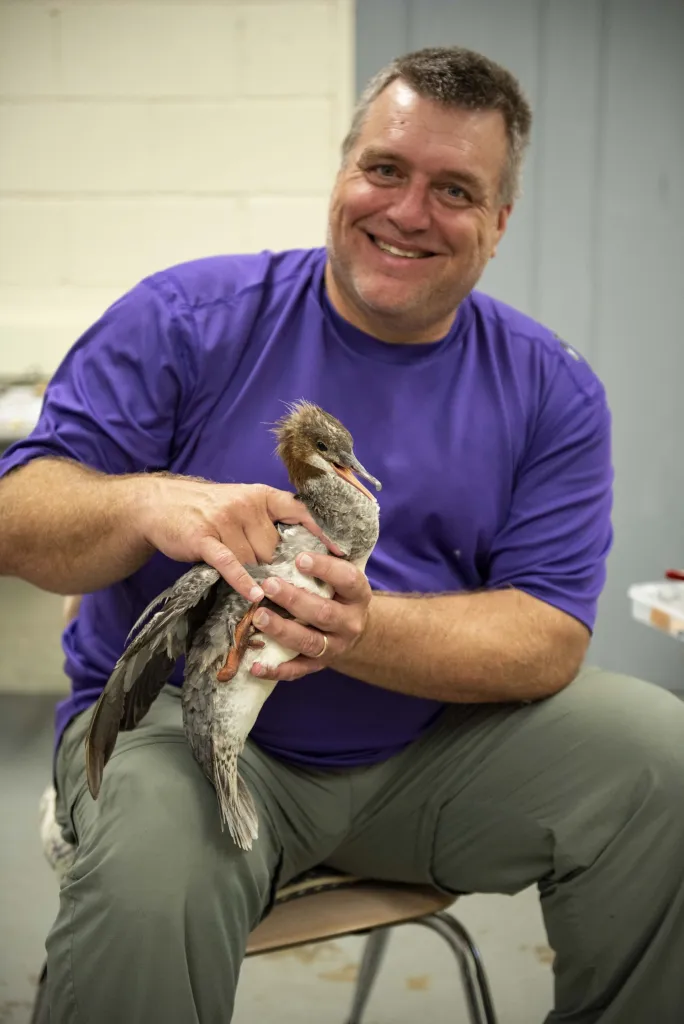
Dr. Curtis L. Blankespoor
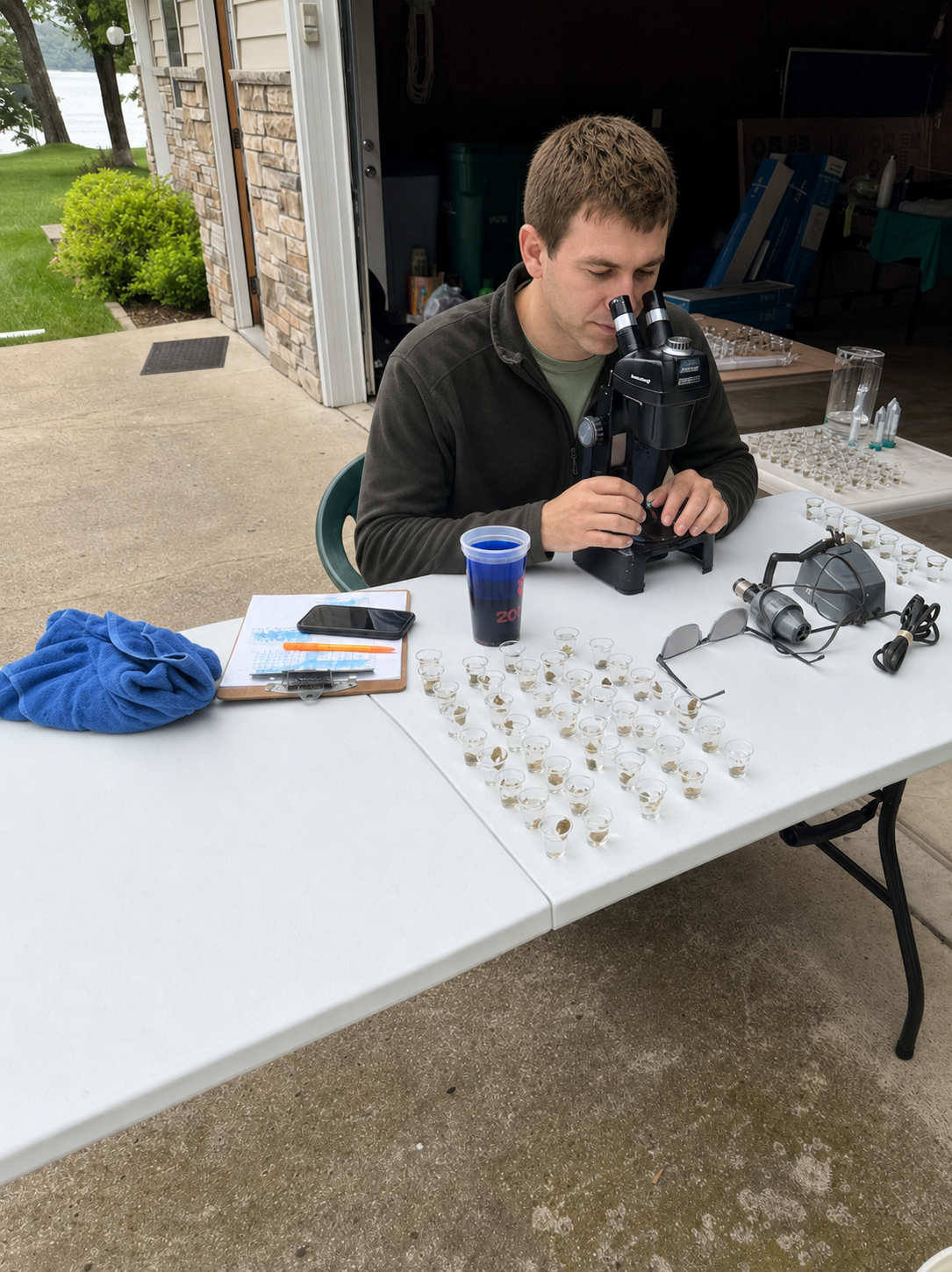
Curtis has studied swimmer's itch since 1988 — through his Cornell PhD on how parasites alter host behavior, and as a Professor at Jackson College, Calvin University, and the University of Michigan Biological Station. He is one of the most experienced swimmer's itch researchers in North America. Over more than three decades of field work — wading lakes, collecting and analyzing snails, surveying waterfowl populations, and designing control programs — Curtis has developed a practical expertise that no textbook can replicate. On lakes where his targeted management plans have been followed, swimmer's itch complaints have dropped dramatically, with some lakes achieving near-complete resolution within two to three seasons.
Dr. Randall DeJong
Randall trained under one of the world's leading schistosome researchers at the University of New Mexico, then completed a postdoctoral fellowship at the NIH studying malaria. He brings sophisticated molecular tools to every lake assessment — qPCR water analysis and fecal testing to identify exactly which parasite species are present. Beyond the lab, Randall has been in the field alongside Curtis: assisting with snail collection and analysis, participating in bird capture and relocation efforts, and helping develop the hands-on protocols that make our assessments the most thorough available.

Bill Ness
Bill spent 42 years as a lake owner in northern Minnesota before dedicating the last three years to solving swimmer's itch — first on his own lake, then building this program to help others. He coordinates the engagement, manages the association relationship, and handles the parts of this problem that don't require a PhD but do require someone who has watched a beloved lake struggle and knows what it means to families.
A Three-Year Commitment
There is no magic bullet. But there is a path forward.
Swimmer's itch doesn't develop overnight, and it doesn't go away overnight. With the right expertise and the active support of property owners, most lakes can start to see meaningful improvement within one to two years — if the guidance is followed and the community participates. Our program is a three-year commitment: long enough to gather real data, implement solutions, and verify that they're working. Here's what each year looks like.
-
Waterfowl survey — Which species are present, how many, and where on the lake?
-
Snail testing — How many are infected? Even 3% infection can make a lake feel unswimmable.
-
Property owner survey — Identify hot spots and establish a data baseline to measure progress against.
-
Written assessment report — A complete picture of what's driving the problem in your specific lake.
-
Written action plan — Recommended control strategies tailored to your lake's biology and geography.
-
Permit filings — DNR and U.S. Fish & Wildlife Service applications for any proposed interventions, if necessary. See note below.
-
Property owner education — Information and guidance for affected residents about what's happening and how they can help.
-
Expert consultation — Ongoing access to the team for questions from your board or your members.
-
Private member portal — A dedicated digital home base for your lake community.
-
Repeat waterfowl survey — Measure change from Year 1 baseline and refine population estimates.
-
Repeat snail testing — Track infection rates across all sites to detect early signs of improvement.
-
Property owner survey — Compare to Year 1 baseline and identify any shifts in hot spot locations.
-
Implement the action plan — Targeted interventions, guided by Year 1 findings, put into motion.
-
Property owner participation — Some solutions only work with community involvement. We'll tell you what we need and how to ask for it.
-
All email communications — Action plan updates, seasonal guidance, and educational content managed for your community.
-
Permit renewals & filings — All DNR and U.S. Fish & Wildlife Service applications and renewals handled, if necessary.
-
Expert consultation — Continued access throughout the season.
-
Member portal — Updated with Year 2 data and communications.
-
Continued waterfowl monitoring — Three years of population data reveals trends that a single season can't.
-
Continued snail testing — Infection rates compared across all three years to measure cumulative impact.
-
Property owner survey — Updated community data showing progress against the original baseline.
-
Plan refinement — Two full seasons of data from your specific lake let us adjust with much greater precision.
-
Three-year summary report — Multi-season trend analysis and long-term recommendations based on documented results.
-
All member communications — Seasonal updates, survey campaigns, and progress reporting continued.
-
Permit renewals & compliance — All ongoing regulatory requirements managed, if necessary.
-
Expert consultation — Full access throughout Year 3 and guidance on what comes next.
-
Member portal — Complete three-year data archive and community records.
Effective swimmer's itch control often requires managing waterfowl — specifically merganser broods, the confirmed definitive host on most northern lakes. This requires permits from the Minnesota DNR and the U.S. Fish & Wildlife Service. Navigating these agencies, understanding what's allowable under which regulations, and maintaining compliance year over year is its own full-time problem. We've done it. We know the process and, if necessary, we manage it for you.
The Investment
The real cost is doing nothing.
What swimmer's itch costs your community
- Rental cabins that sit empty or list at a discount — season after season
- Property values that decline as the lake's reputation for swimmer's itch spreads
- Grandchildren who stop visiting for the summer because the water isn't safe
- Families who give up on the lake entirely and list their properties for sale
- Summers of lost memories — the kind you can't get back
Our program is a substantial investment, and we'll discuss exactly what it looks like for your lake on our introductory call. What we can tell you now: it requires a multi-year commitment, the active participation of property owners, and realistic expectations about the timeline for results.
What it is not is a quick fix. But on lakes where we've correctly identified the parasite and property owners have followed through, the results have been dramatic.
Want to see what an actual lake assessment looks like? Read through a sample assessment report →
Get In Touch
Tell us about your lake.
We'll follow up within 2 business days to schedule an introductory call. No commitment required — just a conversation about what's happening on your lake and whether we're a good fit.
Contact Us
Message received.
We'll be in touch within 2 business days to schedule an introductory call.