Real Time Swimmer's
Itch Reporting

Don't let swimmer's itch ruin your time at the lake. Know before you go — get real-time swimmer's itch updates from lakes across the US and Canada, submitted by swimmers like you.

Mild
Intense
Excruciating
🗺 View Full Map
Recently Reported Cases
View all reports →

Your Complete Swimmer's Itch Resource

From understanding the science to protecting yourself and finding relief — grounded in peer-reviewed research.

What Exactly Is Swimmer's Itch?

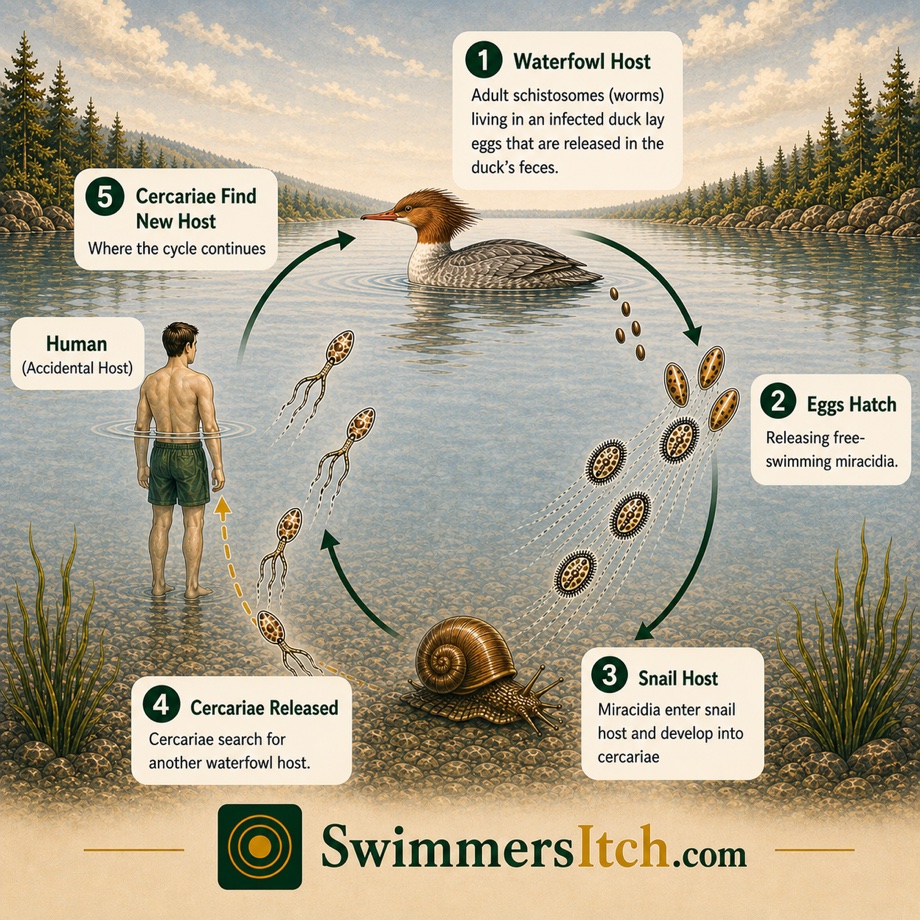
Swimmer's itch (cercarial dermatitis) is a skin rash triggered by an allergic reaction to microscopic parasites — schistosome cercariae — that normally infect aquatic birds and mammals. When an infected snail releases thousands of these larvae into the water, they can mistake a swimmer for their intended bird or mammal host.

Once the cercariae contact human skin, they attempt to burrow in. The human immune system attacks them, and it's this allergic reaction — not the parasite itself — that causes the characteristic red, itchy bumps.

Not all swimmer's itch is created equal. There are 16 varieties of freshwater swimmer's itch depending on the species of waterfowl and snails present. Some varieties, such as those produced by Canada Geese, will only produce mild irritation in humans. Whereas swimmer's itch derived from Common Merganser ducks has been proven to be 45× more severe to humans than other forms of swimmer's itch.

Learn the Full Science →

The Swimmer's Itch Life Cycle

🦆1
Infected Merganser
🐌2
Snail Picks Up Parasite
💧3
Cercariae Released
🏊4
Swimmer Exposed
😣5
Allergic Reaction

Eggs shed by infected ducks are picked up by snails, which release cercariae that can penetrate human skin.

Swimmer's Itch Prevention & Control

Swimmer's itch is manageable when you know the right strategies. Individual precautions can significantly reduce your risk. Practice some of these strategies to help mitigate your exposure.

1

Stay Out of Shallow Water

Snails concentrate in rocky or sandy shallows under 3 ft. Deeper water carries significantly lower risk.

2

Apply Zinc Sunscreen + Petroleum Jelly

A thick barrier of zinc-based sunscreen followed by petroleum jelly creates a physical shield against cercariae penetrating your skin.

3

Towel Off Immediately Upon Exit

For common varieties, vigorous toweling before the water evaporates removes cercariae before they can burrow. Less effective against the Merganser variety.

See All Prevention Strategies →

Large-Scale Control Options

🦆

Waterfowl Removal & Relocation

✓ Proven effective ⚠ Permits required

Relocating Merganser broods within 24 days of hatching eliminates the primary parasite source. Michigan's Higgins Lake achieved a 98% reduction in cases utilizing this approach.

🧪

Copper Sulfate Treatment

✓ Fast acting ⚠ Temporary relief ⚠ Ecological risk

Kills snails in treated areas but provides only localized, temporary relief — wind and currents continue to spread cercariae. Permitted in many states but can have adverse effects on lake ecology and non-target species.

Already Itching? Here's What Works.

Swimmer's itch reactions typically resolve within 5–7 days, but the right approach can dramatically reduce discomfort. The key is acting quickly — the sooner you treat, the milder the reaction.

❄️

Cold Compress

Apply immediately to reduce inflammation and numb the itch. Most effective in the first 24 hours after exposure.

🧴

Anti-Itch Creams

Hydrocortisone cream (1%) reduces inflammation. Calamine lotion provides soothing relief for mild-to-moderate cases.

💊

Oral Antihistamines

Benadryl or cetirizine reduce the allergic response significantly and help with sleep when itching is severe.

🚿

Rinse Immediately

Shower with soap as soon as possible after swimming. Removes cercariae still on the surface before they fully penetrate.

See All Relief Options →

Typical Reaction Timeline

0–1h
Tingling & Red SpotsMild

Initial reaction as cercariae attempt to burrow. Apply a cold compress immediately.

1–12h
Papules FormModerate

Raised, itchy bumps appear. Begin antihistamines and topical cream now.

1–2 days
Peak IntensitySevere

Itching is most severe. Avoid scratching — it worsens inflammation and risks infection.

3–5 days
Gradual ImprovementEasing

Bumps begin to flatten. Continue antihistamines. Keep skin moisturized.

5–7 days
ResolutionResolved

Most cases resolve fully. See a doctor if symptoms worsen or show signs of infection.

Where Is Swimmer's Itch Active?

🔍 Check Your Lake →
Severity
Mild
Intense
Excruciating
🗺 View Interactive Map

Search your specific lake, filter by date range, and subscribe to get alerts when new cases are reported near you.

Help Map Swimmer's Itch Outbreaks

Every report helps protect your community. Share your experience to help others make informed decisions before they swim.